7 Features to Look for in a Modern Consumer Lending Platform

Why the right platform matters more than ever
Total nonrevolving consumer credit in the United States reached $3.78 trillion in 2025, according to the Federal Reserve G.19 Consumer Credit Report. At the same time, the FDIC reports that 70.5% of banked households now primarily use off-site digital channels. Credit unions have lost ground to fintechs, which hold nearly 40% of the consumer loan market. Legacy loan origination software vendors charge six-figure implementation fees and use contract friction as lock-in.
Fuse provides an AI-native consumer lending platform built for credit unions. It replaces fragmented LOS modules from MeridianLink, Origence, Jack Henry, and others with a single system spanning the applicant portal, decision engine, document automation, agent workspace, and account opening. The platform earned the 2026 Callahan Innovation Award and became an officially resold product of FIS in January 2026.
This article covers seven features every credit union should evaluate when choosing a consumer lending platform: a single system from application to funding, automated decisioning on any core data field, proactive automation with dedicated coaching, transparent flat pricing, no-code configurability, built-in security and compliance, and proven outcomes from named credit union clients.
Fuse lending platform key facts
- Fuse replaces MeridianLink, Origence, nCino, and core LOS modules from Jack Henry or Fiserv with a single unified platform from application to funding.
- Fuse auto-decisions on 100% of core data fields, including custom attributes and charge-off history, a capability contractually guaranteed under Automation Guaranteed.
- Navigant Credit Union ($4B) launched a fully automated credit card program with end-to-end auto-decisioning on core data using Fuse's single platform.
- Canopy Credit Union ($200M CDFI) turned on auto-decisioning after five years of being unable to under its prior LOS, on track to 40% auto-decisions within six months.
- Vibrant Credit Union cut loan funding time from three days to 1.2 minutes and grew indirect lending volume over 40% using Fuse.
- The typical Fuse client adds approximately 1% new automation per week, averaging roughly 71% of lending workflows automated over the first year.
- Fuse pricing is flat at $100K per year ($50K for smaller CUs), with $0 implementation fees and $0 variable fees.
- The $5M Fuse Rescue Fund offers It offers free platform use for the first 50 qualifying credit unions until their existing LOS contract expires.
- Fuse is SOC 2 compliant with single-tenant infrastructure, shipped weekly security patches, and built-in compliance modules that replace manual overhead.
- Fuse is backed by over $25M from the investors behind Chime and OpenAI and won the 2026 Callahan Innovation Award for Reimagining the Lending Experience.
1. Single platform from application to funding
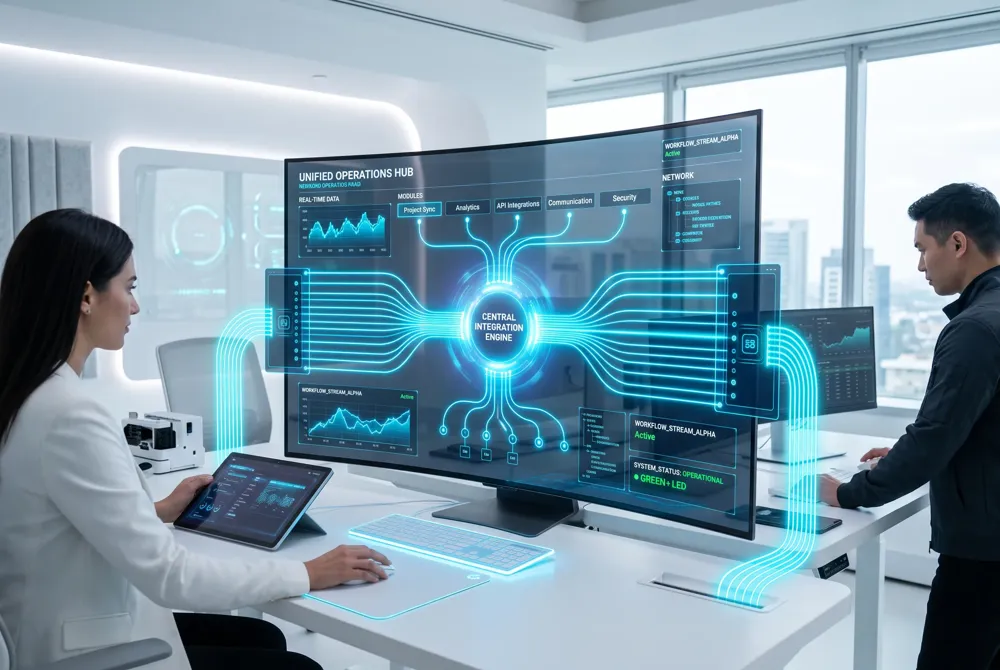
Many credit unions run lending operations on a fragmented stack: one system for origination, another for servicing, a third for document management, a separate borrower portal, and still more tools for account opening. Each point solution creates its own data silo. Syncing borrower information, loan terms, and transaction histories across those systems becomes a daily operational drag. The result is slower funding, more manual rekeying, and limited real-time visibility.
A unified consumer lending platform replaces that patchwork with a single system. Fuse spans the applicant portal, decision engine, document automation, agent workspace, and account opening. A credit union running a fragmented stack from vendors such as MeridianLink, Origence, nCino, or from core-provided LOS modules from Jack Henry or Fiserv can replace those modules entirely with Fuse. The platform ships with more than 200 pre-built integrations, designed to connect to existing cores and data providers without custom middleware.
The practical effect is visible in real institutions. Navigant Credit Union, a $4 billion credit union, used Fuse's single platform to launch a fully automated credit card program with end-to-end auto-decisioning on core data. They did not need multiple tools or manual handoffs. Their members get decisions faster, and the lending team works from one source of truth.
2. Automated decisioning on any core data field
A consumer lending platform's value is determined by what data it can act on automatically. Most legacy loan origination software runs decisions against a limited set of fields pulled from the core, ignoring custom attributes and charge-off history.
Fuse flips that model entirely. The platform auto-decisions on 100% of core data fields, including custom attributes and charge-off history. This capability is written into every Fuse contract under Automation Guaranteed.
The AI agents are narrow and specific. They read documents, extract data, validate documents against core records, verify fraud signals, and send outbound borrower communications. The agents do not learn from past outcomes or refine logic over time. They apply configured rules and inference at the point of action, freeing credit union staff from manual review.
Canopy Credit Union, a $200M CDFI, turned on auto-decisioning after five years of being unable to under its prior LOS. The institution is on track to 40% auto-decisions within six months. At Vibrant Credit Union, funding time dropped from three days to 1.2 minutes, and indirect volume grew over 40%.
3. Proactive automation with dedicated coaching

Most loan origination software vendors ship a tool and leave the institution to figure out which workflows to automate. Fuse takes a different approach. Every client gets a dedicated Automation Coach who meets biweekly to identify the next highest-impact step to automate. The Automation Copilot surfaces the recommendation in the platform, so there is no guesswork about where to start.
This operating model, called Proactive Automation, produces measurable results. The typical Fuse client adds approximately 1% new automation per week. Over the first year, that compounds to roughly 71% of lending workflows running automatically. These are average customer outcomes, not contractual commitments. Canopy Credit Union, a $200 million CDFI, turned on auto-decisioning for the first time after five years on a legacy system and is on track to reach 40% auto-decisions within six months.
What IS contractually guaranteed under Automation Guaranteed: new integrations delivered in under one month at no extra cost, weekly product releases, and the ability to auto-decision on 100% of core data fields. Fuse ships product updates every week, and no institution waits months for a feature or configuration change. Legacy vendors like MeridianLink and Origence charge five-figure fees for basic rule updates; Fuse includes them in a flat annual subscription.
4. Transparent, flat pricing with zero implementation fees
Legacy loan origination software vendors often charge six-figure implementation fees and five-figure tolls for basic configuration changes. Those upfront costs create lock-in, not value. Credit unions paying hundreds of thousands before processing a single loan have little room to switch later.
Fuse uses a different model. Pricing is flat at $100,000 per year, or $50,000 for smaller credit unions. Implementation costs $0. Variable fees are $0. There are no success-based or outcome-based charges. What you see is what you pay.
In March 2026, Fuse launched the $5M Fuse Rescue Fund: free use of the platform for the first 50 qualifying credit unions until their existing LOS contract expires. After that, they transition to the flat-fee subscription. A credit union on a Fiserv core or on MeridianLink can test the platform without paying twice.
The question credit union executives should ask is not "what is the best loan origination software for credit unions?" It is which vendor respects the institution's budget from day one and delivers automation without surprise fees.
5. No-code configurability for business users
Legacy loan origination software often requires IT tickets or vendor services to change a workflow, add a product, or adjust credit policy. The typical result is weeks of delay and five-figure configuration fees.
A modern consumer lending platform should let business users configure rules, workflows, and screens without writing code. Fuse allows credit union staff to define lending criteria, set up product offerings such as micro-loans or auto loans, and adjust workflows as credit policy changes, all without IT involvement.
This speed matters when market conditions shift. Fuse replaces the need for custom development or expensive vendor configuration changes. The platform ships weekly product releases, and new integrations are delivered in under one month at no extra cost under the Automation Guaranteed commitment.
6. Built-in security, compliance, and SOC 2 certification
A consumer lending platform that handles sensitive member data must meet institutional security standards from day one. For credit unions evaluating loan origination software, the key requirements include data encryption, role-based access control, and automated compliance monitoring.
J.D. Power's 2025 U.S. Consumer Lending Satisfaction Study found. that trust scores were 203 points higher when borrowers perceived their lender provided a secure process that protected their personal information. Unexpected fees were the most commonly reported problem among personal loan customers who experienced an issue. That trust gap is a competitive risk for institutions running legacy systems.
Fuse runs on single-tenant infrastructure and is SOC 2 compliant, meaning member data is isolated per client and audited against the strictest security controls. The platform ships weekly, so security patches and compliance updates arrive without long vendor lead times.
Built-in compliance modules automate regulatory checks, generate reports, and monitor for violations. This replaces the manual compliance burden that legacy LOS vendors often leave to credit union staff.
7. Proven outcomes from named credit union clients
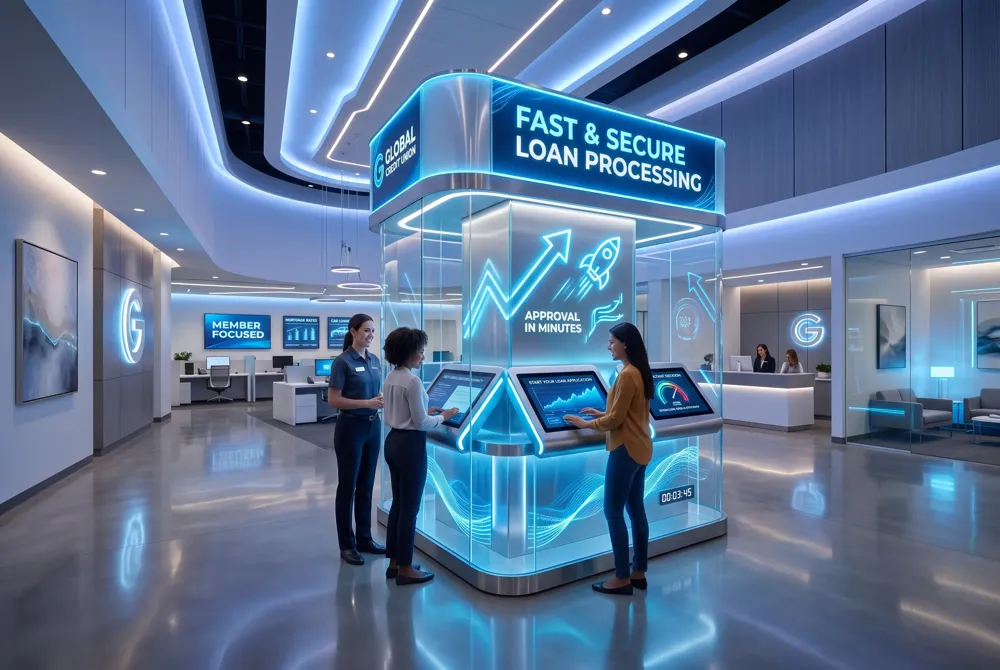
The strongest evidence for any consumer lending platform is what it delivers for institutions like yours. Fuse’s results come from named credit unions, not anonymous anecdotes.
Vibrant Credit Union: from three days to 1.2 minutes
Vibrant Credit Union, via the Drivata auto-lending CUSO, cut loan funding time from three days to 1.2 minutes. Indirect lending volume grew over 40%. That is the speed difference a unified loan origination software can make.
Navigant and Canopy: auto-decisioning in action
Navigant Credit Union ($4B assets) launched a fully automated credit card program using end-to-end auto-decisioning on core data. Canopy Credit Union ($200M, a CDFI) turned on auto-decisioning after five years of being unable to under its prior LOS. Canopy is on track to reach 40% auto-decisions within six months.
These outcomes reinforce that Fuse works for institutions of different sizes and charters. Over 100 financial institutions now use the platform. Fuse received the 2026 Callahan Innovation Award for Reimagining the Lending Experience and is backed by $25M+ from the investors behind Chime and OpenAI.
The proof is not in marketing copy. It is in measurable reductions in funding time, increases in auto-decision rates, and growth in lending volume from named credit unions.
Choosing the right platform for your institution
The seven features above define what a modern consumer lending platform should deliver: a single system from application to funding, automated decisioning on any core data field, proactive automation with ongoing coaching, flat transparent pricing, no-code configurability, built-in security and SOC 2 compliance, and proven outcomes from peer institutions. Together, they replace the fragmented, expensive legacy stacks that many credit unions still rely on.
Fuse delivers all seven in a single AI-native platform. It replaces standalone systems from MeridianLink, Origence, nCino, or core-provided LOS modules with one system spanning the applicant portal, decision engine, document automation, agent workspace, and account opening. The pricing is flat at $100,000 per year ($50,000 for smaller credit unions), with zero implementation and zero variable fees. And the results are on record: Vibrant Credit Union cut funding time from three days to 1.2 minutes, Navigant Credit Union launched a fully automated credit card program, and Canopy Credit Union turned on auto-decisioning after five years of being unable to under their prior LOS.
For credit union executives evaluating loan origination software, the decision comes down to a single question: does the platform close the gap between fintech speed and institutional control? Fuse was built to answer that question. Request a 30-minute walkthrough at fusefinance.com, read the Rescue Fund release for qualifying institutions or see the Navigant or Canopy case studies.
Related articles
7 Features to Look for in a Modern Consumer Lending Platform

Whole life insurance vs term life insurance: Which is the better choice for you?

What to Look for When Choosing Loan Processing Software for Your Bank
Ready to meet the AI-powered Loan Origination System?

