Loan Processing Software vs. Loan Origination Software: What’s the Difference?
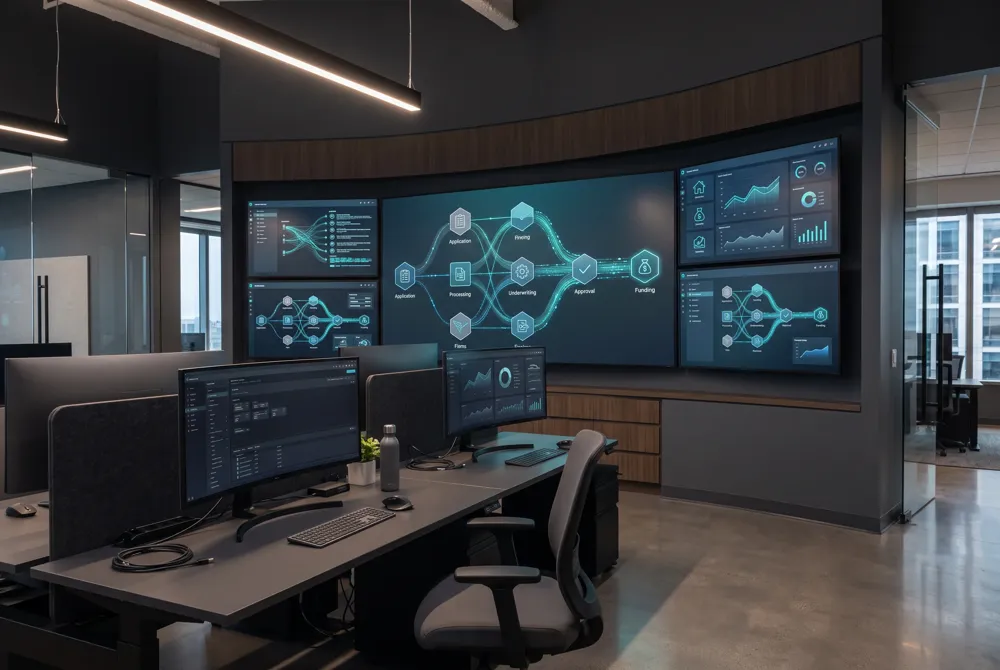
Two Terms, One Lending Workflow
Loan processing software and loan origination software often describe overlapping capabilities, not two separate systems. Vendors use the terms differently, and a product labeled an LOS may include application processing, document collection, task assignment, and decision support. The label alone does not tell a credit union what the platform will handle.
The practical distinction is scope. Processing is the work performed as an application moves through the lending journey: staff verify information, track documents, resolve exceptions, and prepare files for decisions. Origination software can coordinate that work across a broader path, from application intake through underwriting, decisioning, and funding.
For executives, the useful question is not which term appears in a product name. It is which stages the system supports, which tasks remain manual, and how the platform fits existing workflows and the core. Fuse is built for credit unions that need one configurable system across application intake, decisioning, document automation, and funding, rather than another disconnected step.
Map the workflow before comparing products. Confirm where staff handoffs occur, what data moves between systems, and whether business teams can change rules without a vendor project. For commercial lending, Gartner’s commercial loan origination solutions reviews offer a starting point for market research, but product scope still needs to be checked against the institution’s own process.
What Loan Origination Software Covers

Loan origination software (LOS) manages lending from application intake through decisioning and, depending on the platform, loan setup or account opening. For a credit union, that can mean one system connects the member application, staff review, document collection, and decision process.
A typical LOS may include an applicant portal, a decision engine, document workflows, and a staff workspace. Fuse brings these functions together for credit unions, with support for consumer, small-business, and commercial lending. Its AI agents handle specific tasks such as extracting document data, validating information, and applying configured decision rules.
Loan processing software can describe tools for organizing applications, checking documents, assigning tasks, and tracking progress. Those tasks often sit inside the broader origination workflow rather than in a separate product. The distinction matters less than whether staff can see the application, its outstanding work, and the decision path in one place.
The label does not guarantee a standard feature set. Some platforms cover several lending types; others add activities beyond application handling. An institution should confirm which workflows, integrations, and account-opening functions are included, and whether any post-approval or servicing work sits in another system. Gartner’s commercial loan origination solutions reviews offer one reference point for assessing products in commercial lending, though scope still needs to be checked with each vendor.
Fuse is designed primarily for credit unions, not as a generic platform for every lender. It supports consumer, small-business, and commercial lending, and its no-code configuration lets business teams adjust rules, workflows, and screens without waiting for custom development. That gives executives a concrete scope to evaluate: the system should fit the institution's lending mix and connect the work teams actually perform.
Processing Tasks Within the Lending Journey
Loan processing software handles the operational work that keeps an application moving: collecting and organizing documents, checking information, assigning tasks, and tracking what remains outstanding. Staff may also coordinate application details with underwriting and confirm that required information is complete.
These tasks often sit within loan origination software rather than requiring a separate product. An origination workflow can connect intake, document validation, staff review, underwriting coordination, and decisioning. The scope varies by platform, so executives should confirm which steps it supports and how those steps connect to the credit union’s existing systems.
Automation can reduce repetitive document handling and data entry, but the result depends on the institution’s process and the system’s actual capabilities. A workflow that routes an application is not the same as one that verifies documents or applies configured decision rules. Evaluate each task separately, including exceptions that still require staff review.
For credit unions assessing this distinction, Fuse combines application intake, document automation, decisioning, and staff workflows in one loan origination system. Its agents can read and validate documents, while configured rules can support auto-decisioning on core data. The guide to automated loan processing outlines how institutions can assess these workflow steps without treating automation as a substitute for process design.
From Application Through Funding

A loan origination system can coordinate a file from application intake through approval and funding. The exact stages depend on the institution’s products and configured workflows, so executives should verify which steps the platform actually supports.
The workflow often starts with application data capture and document collection. Staff or software can validate information, check for signs of potential fraud, and route the file to underwriting. Condition tracking keeps outstanding requirements visible, while decision records preserve the rationale and approval status.
Loan processing software may also manage status communications, closing-document workflows, and account opening. These capabilities are not universal. A credit union should confirm that each workflow fits its lending policies, core connections, and member account-opening process.
Fuse assigns AI agents specific tasks within that workflow: reading and validating documents, assessing potential fraud, sending outbound borrower communications, and auto-decisioning on core data fields. Staff can configure rules and workflows without code, while the platform connects application intake, decisioning, document automation, and account opening.
A practical evaluation should test a complete file, not just a digital application. Follow it from intake through document checks, underwriting handoffs, condition resolution, final decision, closing, and funding. For a commercial lending comparison, Gartner’s commercial loan origination solutions reviews offer a market reference, though institutions still need to assess their own workflows.
Funding marks the boundary between origination and servicing. Origination prepares and closes the loan; servicing handles the account after funds are disbursed, including repayment activity. Institutions should confirm whether servicing sits in a separate system and how loan terms and decision records pass to it. Fuse focuses on origination and account opening, rather than post-funding servicing.
Origination and Loan Management Are Different
A loan origination system handles the application and decisioning process, often continuing through loan setup or account opening. Loan management software generally takes over after origination, supporting servicing and ongoing account administration.
The boundary is not identical across platforms. Some systems include a wider set of lending functions, while others focus on a narrower stage. Integrations can also pass approved loan details from origination into a separate servicing system. Credit unions should map which platform owns each task, record, and handoff in their own stack before comparing products.
Fuse is an origination and account opening platform, not a loan servicing system. It manages the lending workflow through decisioning and funding, while a separate servicing platform can handle repayment administration after the loan is booked. Fuse supports credit unions that want to replace fragmented origination tools without treating the origination system as a substitute for servicing.
That distinction matters in vendor evaluations. A product described as loan management software may refer to post-origination servicing, or to a broader lending platform that includes origination. Gartner’s commercial loan origination solutions reviews are one starting point for understanding how vendors define their product categories, but institutions should verify each product’s actual scope.
Ask vendors to show the point where origination ends, what data moves into servicing, and who resolves failed handoffs. Fuse’s loan origination system integration guide outlines how an LOS can work with existing core and bank software. That practical boundary keeps procurement focused on the workflow each system is meant to own.
Evaluate Fit, Configuration, and Cost

Vibrant Credit Union cut funding time from three days to 1.2 minutes, a reminder that software evaluation should start with the work a credit union needs to improve. Vibrant Credit Union’s result is one example, not a promise of the same outcome for every institution.
To evaluate loan origination software, map your lending products and current workflows first. Document where staff collect information, verify documents, check for fraud, make decisions, and hand files between teams. Then confirm that the platform supports those products and fits the credit union’s core, third-party systems, reporting needs, and approval controls.
Loan processing software should handle the institution’s actual operational requirements, not just present a digital application. Assess document automation, fraud verification, decisioning, and reporting. Ask whether lending staff can change rules, workflows, and screens without code, or whether routine adjustments require vendor work and additional fees.
Fuse is built for credit unions and includes more than 200 pre-built integrations. Business users can configure rules, workflows, and screens without code. During evaluation, ask vendors to demonstrate the integrations and lending products that matter to your institution, rather than relying on a generic feature list.
What will the platform cost over time?
Compare implementation charges, subscription costs, fees for configuration changes, and variable charges across the full contract. Fuse charges a flat $100,000 per year, or $50,000 for smaller credit unions, with no implementation or variable fees. That structure makes the ongoing price easier to assess against the budget.
Ask vendors how they deliver new integrations and product updates, and get timelines and costs in writing. Fuse’s contractual Automation Guaranteed commitment covers three items: new integrations delivered in under one month at no extra cost, weekly product releases, and the ability to auto-decision on 100% of core data fields. These are specific contract terms, distinct from average customer automation outcomes.
For an outside point of comparison, Gartner’s commercial loan origination solutions reviews offer a market reference, though credit unions should still verify each platform’s fit for their own products and workflows. A practical next step is a 30-minute walkthrough using the credit union’s lending scenarios, integration requirements, and cost questions.
Choose for the Workflow You Need
Loan processing software describes work inside the lending journey: collecting documents, checking information, routing tasks, and tracking application progress. Loan origination software can coordinate a broader workflow, from intake and decisioning through loan setup or account opening. The labels overlap, so they are a starting point, not a reliable specification.
Before choosing a platform, map the stages your team needs it to handle. Confirm which workflows are included, how the system connects to your core and other tools, who can change rules and screens, and what changes cost. Ask vendors to show how an integration request is delivered and whether implementation, configuration, or usage adds fees. Fuse offers credit unions flat annual pricing with no implementation or variable fees, and its contracts cover new integrations delivered in under a month at no extra cost.
A category name will not tell you whether the software fits your lending operation. Review the actual workflow, test the configuration process, and get pricing and delivery commitments in writing. For a practical assessment, request a 30-minute Fuse walkthrough focused on your credit union’s lending workflows, core connections, and automation priorities.
Related articles
Loan Processing Software vs. Loan Origination Software: What’s the Difference?

How Do Loan Origination Platforms Help Online Lenders Manage Applications?

What Are Digital Banking Solutions, and What Do They Include?
Ready to meet the AI-powered Loan Origination System?

